Meta expects the US midterm results to make building data centres harder. Speaking at a Wall Street Journal technology conference on Wednesday, Meta president Dina Powell McCormick said Democratic wins would make it “a lot harder” for companies to build them, and that the industry has “not done as good a job as we needed to explain the benefits of these investments”, TechCrunch reported on 5 November 2026.
“I think it’s going to be harder,” she said. “It has been hard, I should say, but I also think that it’s becoming clear what models work, and the states want those models that work.”
What the election showed
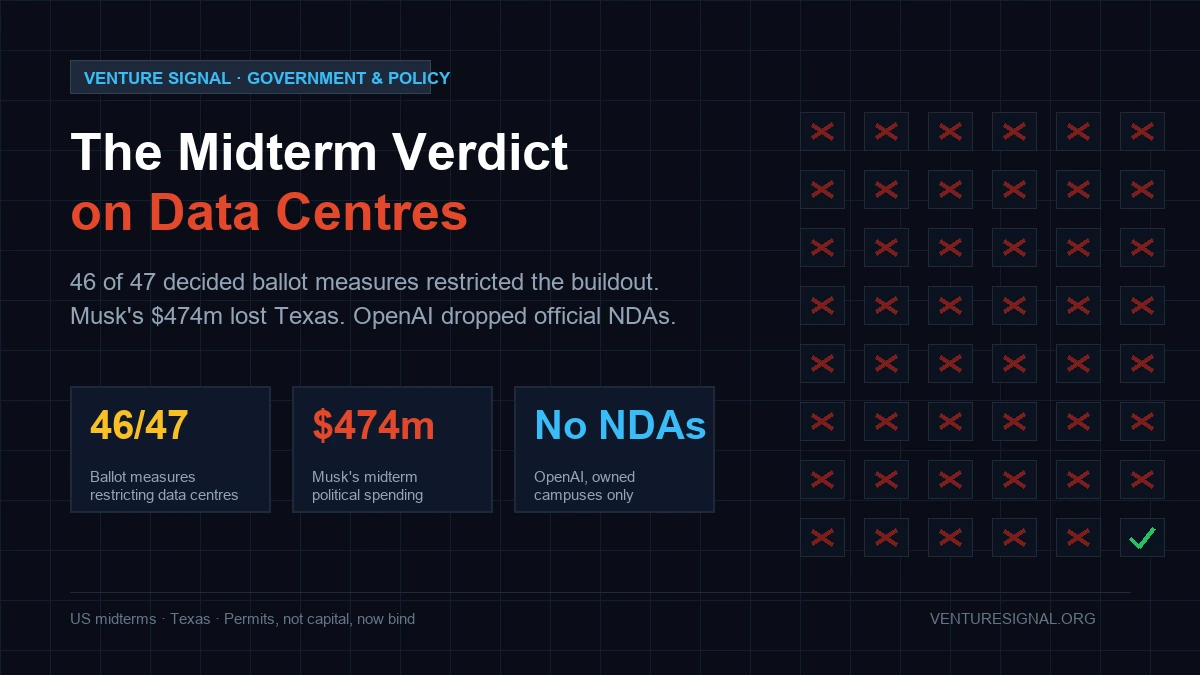
The 3 November results gave Democrats control of Congress, TechCrunch reported. Data centres were on the ballot in several states. In an NBC exit poll cited by TechCrunch, almost 80% of respondents opposed data centres being built in their neighbourhoods and almost 60% called them a crucial or major factor in their vote. In Ohio, the county where Meta had planned a 700,000-square-foot facility passed a ban on data centres, and Goldman Sachs expects construction delays in states such as Georgia and Texas.
Powell McCormick tied the backlash to wider unease about AI. “The visible sort of manifestation of AI is a data center, and it’s something that people can say, ‘I don’t want this in my community,’” she said.
Meta’s playbook for local deals
She set out the terms Meta now uses to win approval: paying for its own electricity, directing tax surpluses from the sites to teachers and first responders, hiring locally and seeking support from both parties. She expects projects to face more review and to be weighed against what residents want. Meta has data centres in 23 states, she said, and five planned projects, including one in Texas, are of 1 gigawatt or more.
She also gave a fallback for the spending. Meta wants its Muse assistant to grow well beyond its current 10 million users, but even if that falls short, the capacity can be rented out. “We’re getting calls every day to lease that compute,” she said, “and so one way or another, we’re seeing a path to monetization.”
What it means for founders and investors
- Permits are now a pricing input. Local approval, power bills and community deals add time and cost to new capacity. Founders who rely on a single provider or region should ask where that provider’s next sites are and how far along their permits are.
- Capacity may move to existing sites and friendlier states. If moratoriums spread, already-permitted capacity becomes more valuable. That favours operators holding approved land and power.
- Watch the leasing claim. Meta saying it could rent spare compute to others suggests surplus capacity is possible at some point. For buyers of compute, more suppliers would mean more choice on price. This is analysis, not investment advice.
For the scale of spending now exposed to local politics, see our report on Big Tech’s 2026 capex guidance.
Sources
- TechCrunch, “Meta warns that election backlash against data centers could make AI expansion harder” (5 November 2026)
- TechCrunch, “After the midterms, a bigger clash over data centers could be coming” (4 November 2026)
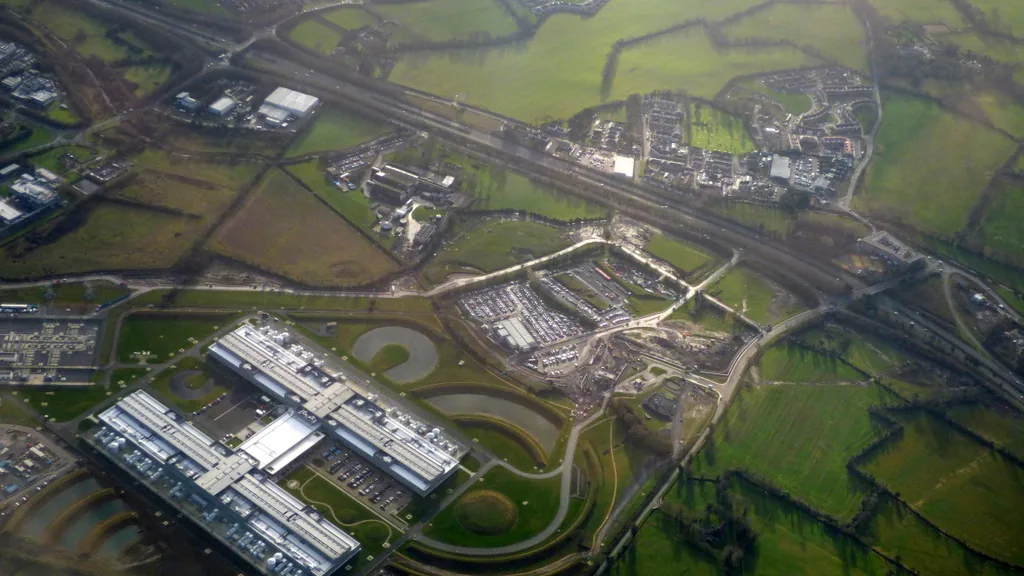
Photo: Meta’s data centre at Clonee, Ireland, from the air, by Thomas Nugent, CC BY-SA 2.0, via Wikimedia Commons.