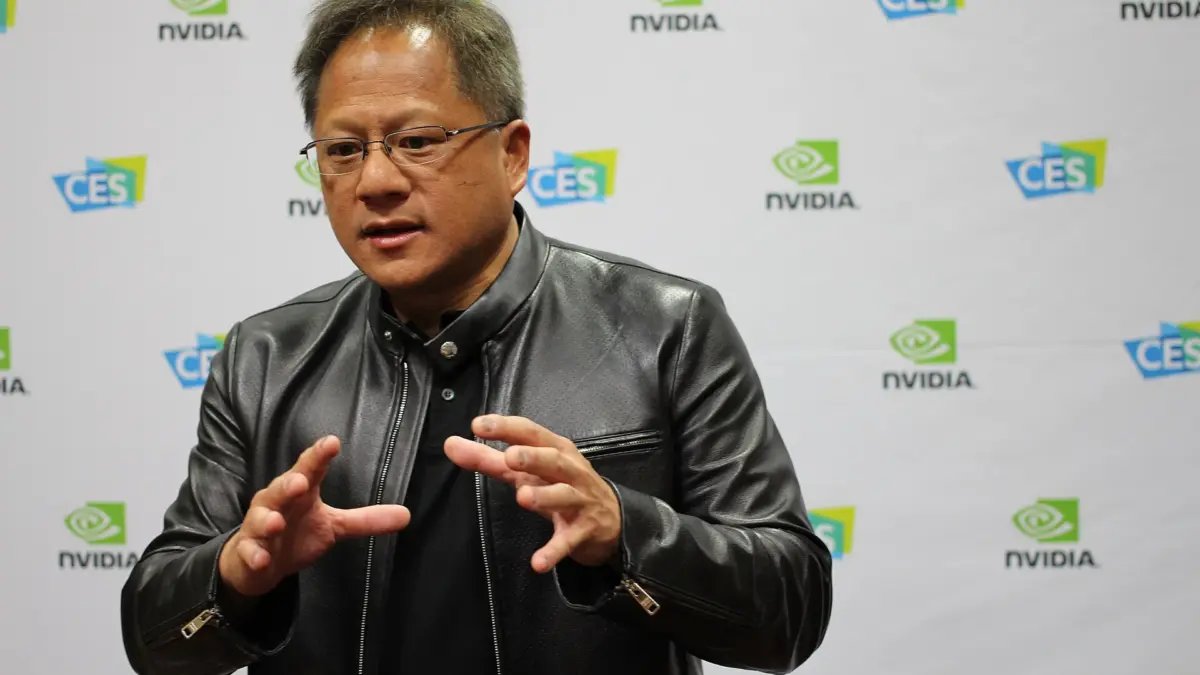
Jensen Huang has stepped down as chief executive of Nvidia with immediate effect, ending 33 years at the head of the company he co-founded in 1993. Chief financial officer Colette Kress will be interim CEO and will remain CFO until a permanent successor is named, CNBC reported on Thursday 12 November. The board named its first-ever chair, Harvey C. Jones, a director since 1993 and a former chief executive of Synopsys.
“The Board has full confidence in Colette and the leadership team,” Jones said. The board called Huang’s contributions “profound” and said it would consider internal and external candidates for the permanent role. Huang, 63, was not quoted in the company’s release, which gave no reason for his departure.
Five days from apology to resignation
On Sunday 8 November Huang apologised for being “unfaithful to my wife” after reports of his relationship with Alice Huang, a Megaspeed executive US officials reportedly believe is a Chinese intelligence asset; Megaspeed denies wrongdoing. On Tuesday the board hired the law firm Wachtell Lipton to investigate the national security concerns. On Wednesday the New York Times reported a second affair, with Kimberly Powell, Nvidia’s vice president of healthcare and a direct report of Huang’s, TechCrunch reported. Nvidia, like many companies, has rules discouraging relationships between managers and the people who report to them.
The board met on Wednesday afternoon. The Wall Street Journal had reported that it was preparing to remove Huang, and Bloomberg that Nvidia was working with an outside firm to identify possible successors, according to TechCrunch. On Capitol Hill, the chairs of the House China and Foreign Affairs committees had said Huang could be subpoenaed if he did not attend a closed-door briefing on Alice Huang, TechCrunch reported.
The market and the analysts
Nvidia’s shares fell 13% at the open on Thursday and were trading about 10% lower, at around $156, later in the session, Yahoo Finance reported. They closed at $173.73 on Wednesday, against a closing high of $239.24 on 6 October; the company has lost about $2tn of market value since that peak and more than $740bn since last Friday’s close, according to CNBC.
At least six brokers cut their ratings, CNBC reported. Bernstein’s Stacy Rasgon moved to Market Perform and cut his target to $200 from $400, saying the fundamentals were intact but the shares too uncertain to buy in size. Melius Research and Evercore both downgraded, Evercore cutting its target to $186 from $465 and noting that Nvidia has no obvious succession plan. Dan Ives of Yorkville Ives & Co kept his Outperform rating, valuing the shares at $300 with Huang and $225 without him. “You can’t deny the board has done a horrible job of succession planning,” former Nasdaq chief executive Robert Greifeld told CNBC.
What happens next
Nvidia still plans to report its fiscal third-quarter results on 17 November. Analysts named Kress, Ian Buck, Bryan Catanzaro, Michael Kagan and Bill Dally as possible internal successors. The Wachtell Lipton investigation continues, and the board has said it has no reason to believe that national security or Nvidia’s secrets were compromised.
What it means for founders and investors
The world’s most important AI supplier has lost its founder in a week, and investors are now pricing key-person risk they had ignored for years. For start-ups that depend on Nvidia hardware, the near-term effect is small: product roadmaps and customer contracts run for years. The larger question is strategic. Huang set the direction on software, partnerships and which customers got scarce supply first; a new chief executive may make different choices. For private AI companies valued against Nvidia’s multiple, a lower and less certain price for the sector’s bellwether feeds straight into late-stage rounds.
See also our report on the board probe and the first class action.