Arizona has 172 data centres, and the new ones are meeting organised resistance. The Verge reports that newer hyperscale proposals, which demand more water, power and land, are drawing a bipartisan coalition of residents against them.
Project Blue
The most contested case is Project Blue, a 600-megawatt campus that Beale Infrastructure is building on a 290-acre site near Tucson. According to The Verge, the early pitch promised “100% renewable water resources”, with a pipeline and a switch to reclaimed water. In August 2025 Tucson’s city council voted unanimously to block the annexation of the land, yet Beale went ahead anyway. The design later moved to closed-loop air cooling, and Amazon reportedly pulled out as the tenant.
The state’s water department has since approved two wells on the site that allow up to 31 million gallons of groundwater a year. Local public radio reported the same limit, at 96.5 acre-feet, or about 31.4 million gallons. Beale says the water is for construction only and that, once the centre is running, use will be limited to ordinary domestic purposes. Opponents have settled on a slogan: NOT ONE DROP FOR DATA. In September, Pima County imposed a 120-day moratorium on new data centre projects.
The numbers cut both ways
The scale is small next to farming. The Verge reports that Fondomonte, a Saudi-owned alfalfa grower, used 11 billion gallons in 2023, compared with Project Blue’s 31 million. TSMC’s Phoenix complex, it notes, uses more water in nine days than Project Blue is expected to use in a year. The article describes agriculture, not heavy industry, as the main driver of Arizona’s dwindling aquifers. Arizona State University’s Sarah Porter told The Verge that moving away from unsustainable farm use “is to have different economic activities – like data centers and chip manufacturing”.
The Colorado River adds pressure: the state will soon lose access to nearly 30% of the water it receives from it, according to The Verge.
Why data centres draw the anger
Our reading is that water is the visible edge of a broader objection. Project Blue promised about 200 permanent jobs, against more than 3,500 at TSMC in Arizona. Opponents see a building that is noisy, power-hungry and owned by distant companies, and the water is where the argument is easiest to make. Developers’ standard promises have run into a trust problem, and the changes of plan did not help.
For investors, the lesson is practical. Permitting, local politics and water rights are now part of the cost of building AI capacity, alongside chips and power. They also feed the financing story: credit-desk sources told CNBC that high-yield lenders want the permitting picture settled before they commit, as we noted in Neoclouds are shut out of the cheap bond market.
Sources
- The Verge, “AI has come for Arizona’s water” (29 October 2026)
- KJZZ, “Project Blue data center could use up to 31 million gallons of water per year” (29 May 2026)
- CNBC, “CoreWeave’s market confidence erodes as bond yields spike, stock sinks” (21 October 2026)
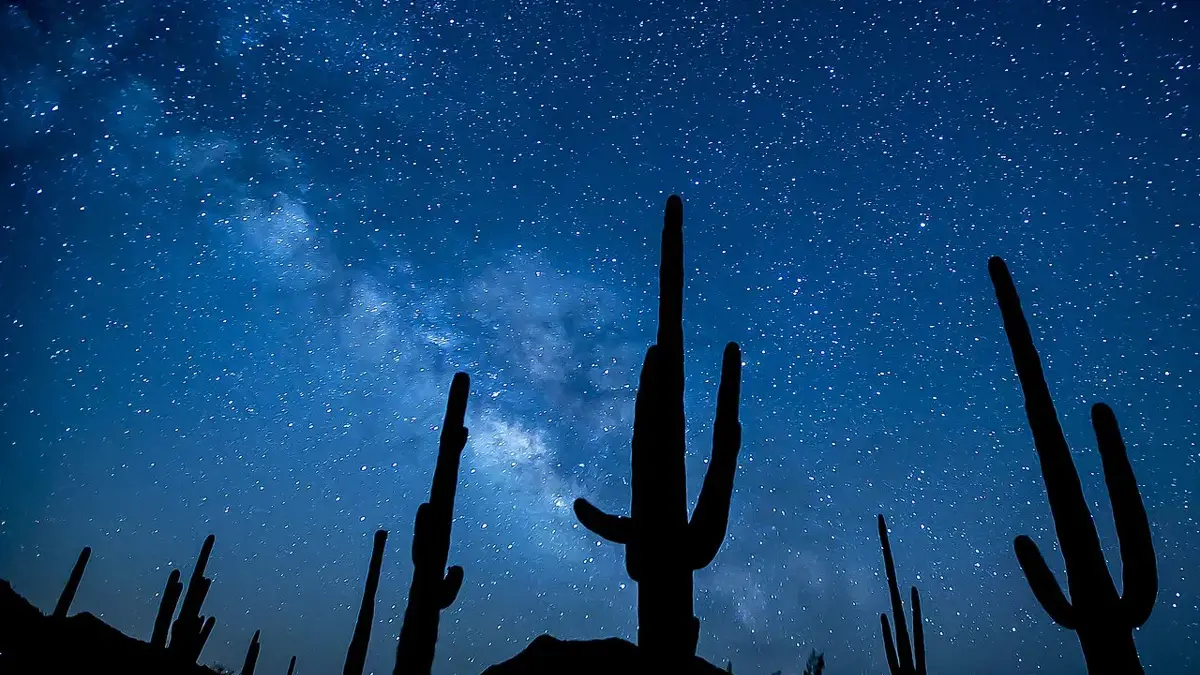
Photo: Saguaro cacti and the Milky Way, Sonoran Desert National Monument, Arizona, by the Bureau of Land Management, public domain, via Wikimedia Commons.