CoreWeave, Nebius and Nscale have effectively been shut out of the bond market in recent weeks, the WSJ reports. Building AI capacity is still quick; borrowing for it is getting slower and dearer.
By Venture Signal Desk · · 3 min read · Global · US · Signal strength 3 of 5
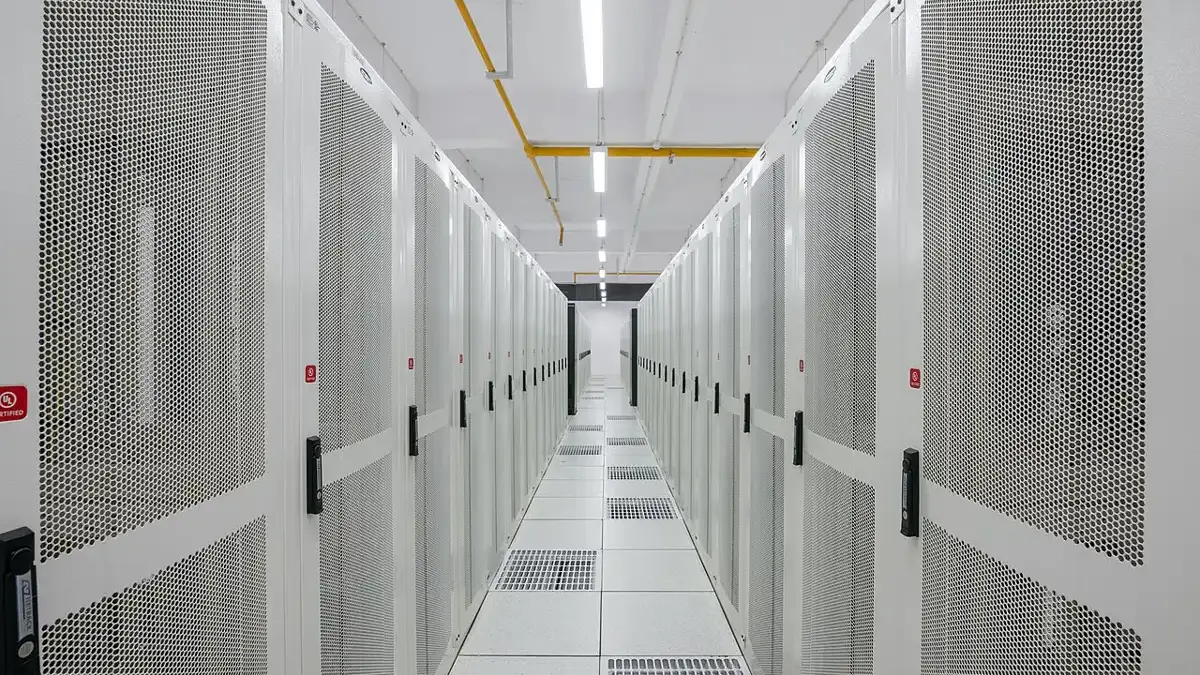
Server racks in a data centre. Photo: PiDatacenters, CC BY-SA 4.0, via Wikimedia Commons
CoreWeave, Nebius and Nscale have effectively been shut out of the bond market in recent weeks as lenders and investors demand tougher terms, according to a Wall Street Journal report cited by Techmeme. The report, which surfaced on 31 October, describes a new phase of the AI build-out.
What the market is showing
The WSJ article is paywalled, so we checked the picture against CNBC’s reporting from mid and late October. On 15 October, CNBC put the yield on CoreWeave’s 2032 bond at 15.77%. By 21 October it reported the company’s unsecured debt yielding about 15%, its five-year credit default swaps at 1,145 basis points, and its stock down 36% in the month. CoreWeave’s market value was roughly $31bn, against a peak of about $90bn.
The debt is large. CNBC reported about $20.7bn falling due through 2030 and another $14.9bn after that, against $5.5bn of cash at the end of the second quarter. FactSet analysts expected negative free cash flow of $10.1bn in the third quarter, and a Baird analyst estimated that CoreWeave may need to raise roughly $30bn in 2027.
Credit-desk sources told CNBC that the high-yield market was effectively on hold until after the US midterm elections, with investors wanting the permitting and regulatory picture around data centres clarified before committing.
Not a closed door for everyone
There are counterweights. CoreWeave’s chief executive told staff the company’s financing mixes infrastructure-backed borrowing, corporate debt, equity and customer prepayments. Analysts at Goldman Sachs, JPMorgan and Barclays published positive notes that week, pointing to GPU-backed loans and investment-grade customers such as Microsoft and Meta. Goldman’s view was that “not all neoclouds are created equal”. The WSJ’s finding concerns the bond market specifically.
Nscale, the UK neocloud, filed to list in New York last month, according to CNBC, and investors were waiting to see whether it would go ahead.
Why it matters
Our reading: a neocloud is a financing business as much as a technology one. It signs a customer contract, borrows against it and the chips, and earns the spread. When the bond yield sits near 15%, the spread narrows, and the model works only for those with the strongest contracts or the cheapest alternative funding.
Venture Signal analysis is general information for founders, fund managers and operators. It is not investment, legal or tax advice. Figures labelled modelled, illustrative or desk estimate are worked examples, not company disclosures. Spotted an error? Corrections are published on the article.
The summary looks productive. But who actually owns what happens next? Picture this: a meeting ends at 3:00. At 3:02, an AI summary appears in Slack or email, looking like the most organised person in the company. Decisions. Owners. Next steps. Even the headings are reassuringly bold. Then Friday arrives, and someone asks the question […]
Jensen Huang has resigned as Nvidia's chief executive with immediate effect after two reported affairs, one with a woman US officials reportedly link to Chinese intelligence. CFO Colette Kress is interim CEO; the shares fell 13% at the open.