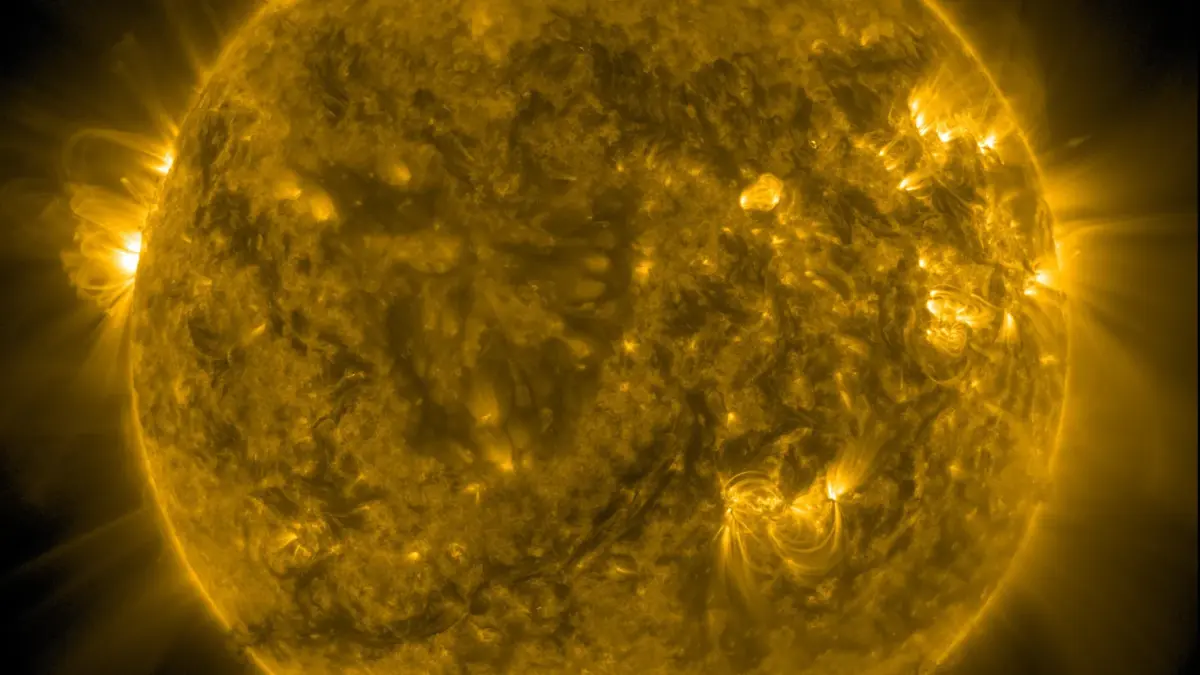
For thirty years the space sunshade lived in the same drawer as the space elevator: elegant, physically sound, commercially absurd. Two documents moved it out of that drawer in 2026.
The first arrived in October, when the Planetary Sunshade Institute published a baseline survey of six space reflector architectures. The study was funded by a roughly £400,000 grant from ARIA, the UK’s high-risk research agency, as part of its £56.8 million Exploring Climate Cooling programme. Its conclusions are carefully unromantic. A shield is buildable with no new physics. It is realistically twenty to forty years away. And the largest determinants of that timeline are the cadence of heavy-lift launch vehicles and the development of large-scale lunar resource extraction.
The second is NASA’s DimSun concept, published under the agency’s Innovative Advanced Concepts programme in July 2026. DimSun proposes a controlled cloud of hollow dust particles at L1 rather than a sail, cutting solar insolation by 1.16 per cent. Its rough one-time fixed cost is $134 billion, including a 43 per cent margin. The authors claim it is 150 times cheaper than occulter-based space approaches and six times cheaper than stratospheric aerosol injection across the century.
Put those numbers next to the incumbent cost of decarbonisation and the temptation is obvious. Global energy transition spending runs at roughly $2 trillion a year. A $134 billion one-off that buys about a degree of cooling looks, on a spreadsheet, like the cheapest climate policy ever proposed. That is precisely why investors should be suspicious.
The physics is settled. The business model is not
A shield that dims the planet by one per cent has no paying customer. Its output is an unpriced global public good: nobody can be excluded from the shade, and one operator’s deployment changes the climate for every other country on Earth.
That is not a market failure waiting for a clever financial engineer. It is the definition of a good that markets do not produce, which is why every serious proposal puts deployment in the hands of governments or a treaty body. The Planetary Sunshade Institute says as much: only governments can authorise and fund geoengineering deployment.
So there is no equity story in the shield itself. There is, instead, a supply chain and a verification layer, and those are investable.
What actually gets built first
Follow the mass. Seventy million tonnes of material is roughly 1,500 times everything humanity has launched to date. Whether that mass comes from Earth or the Moon determines which companies get paid.
Earth-sourced architectures are a bet on launch cadence and $/kg. The 2021 Fuglesang and García de Herreros Miciano analysis in Acta Astronautica put a total system cost of $5 trillion to $10 trillion at a launch price of $50/kg. Every dollar of launch cost reduction moves that number, which is why the sunshade thesis is, in practice, a leveraged bet on heavy-lift competition.
Lunar-sourced architectures are a bet on extraction, tethering and in-space manufacturing, all of which sit at low technology readiness. The ARIA-funded work is explicit that this is the second dominant variable in the timeline. Investors who want exposure to a sunshade without a thirty-year wait should be looking at the enabling layer, not the shield: thin-film and large-area deployables, precision station-keeping, electric propulsion, lunar regolith handling, and the robotics that assemble structures nobody can visit.
There is one more, cheaper entry point. DimSun’s dust cloud is a 600-fold mass advantage over sail concepts, according to the 2026 survey, and it disperses within about a hundred days if the control spacecraft are switched off. If that architecture survives engineering scrutiny, the critical assets become the control constellation and the particle manufacturing line, not three million square kilometres of sail. That is a different, and much more financeable, capital stack.
A second stack that needs capital far sooner
The shield is a twenty-to-forty-year asset. The problem it creates is present-day.
Any deployment would immediately generate an attribution industry. Governments, insurers and litigants will need to know whether a given flood, drought or heatwave was made more likely by the shield, by greenhouse gases, or by neither. Today that analysis is academic, slow and contested. At planetary scale it becomes a market: continuous, auditable, regionally resolved climate attribution, sold to sovereigns, reinsurers and the operators themselves.
Reinsurance is the tell. The industry already prices physical climate risk with more discipline than most equity markets. A world in which a small group of states can alter the radiative balance becomes a world in which underwriting requires a verified record of who did what to the sky. That is software, data and instrumentation, and it is fundable now, at venture scale, without waiting for a treaty.
Cooling credits are the version of this that already exists and should be treated with caution. A handful of startups sell credits against small balloon releases of reflective particles. The voluntary market for them is thin, the measurement is weak, and the legal status is contested: the Convention on Biological Diversity maintains a de facto moratorium on outdoor geoengineering activity, and the European Parliament has called for an EU-wide moratorium on use. Mexico has banned SRM experiments outright. A credit that cannot be registered in the jurisdictions that matter is not an asset class. It is a marketing instrument.
Where capital has moved is research. An Israeli-US startup raised $60 million in October 2025 for SRM research and experimentation, according to a European Parliamentary Research Service briefing published in May 2026. That is real money for a category with no revenue, which tells you the investors are underwriting optionality, not cash flow. Optionality is a legitimate reason to write a cheque. It is a poor basis for a fund.
The governance discount is the valuation
Every emerging technology trades at a discount for regulatory uncertainty. Solar radiation modification trades at something closer to a prohibition risk.
The institutional picture in 2026 is not ambiguous. ARIA funds research and states that it is not funding deployment. UN Environment Programme’s May 2026 working paper synthesised the science and called for more research plus inclusive governance; a coalition of academics answered in July that precaution means non-use. The EU Council issued cautious conclusions in April. The European Parliament’s research service recorded that Parliament wants a moratorium on use and a global framework built on non-deployment.
Notice what is missing. There is no licensing authority. No treaty names a shield. No agency could inspect one, insure one or order it switched off. For an investor, that is not a regulatory delay. It is the absence of the institution that would make the asset bankable in the first place.
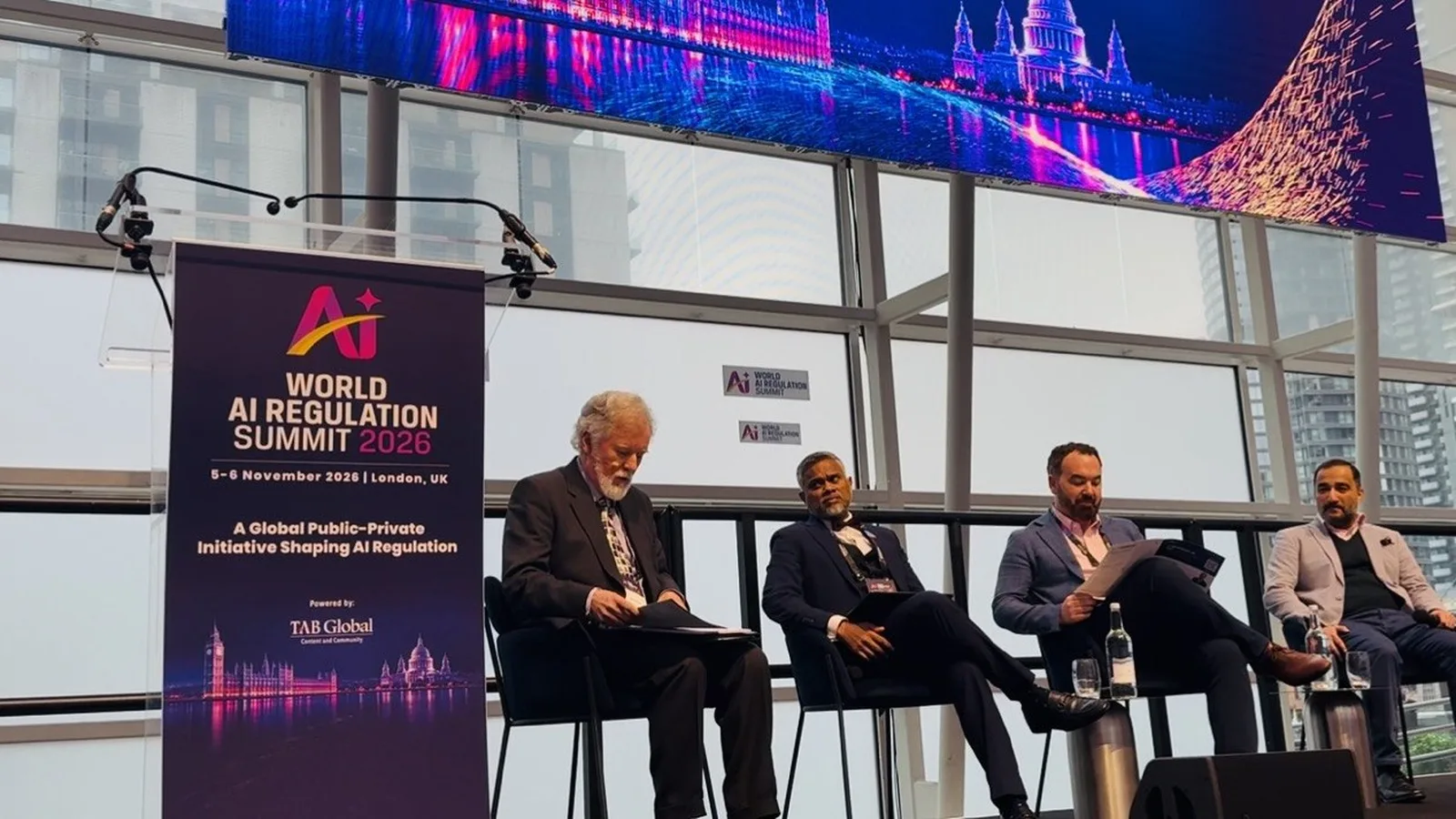
The BRICS+ dimension sharpens it. The expanded group met in New Delhi in September 2026 under India’s chairship, and its declaration covers climate finance, resilience, critical minerals and a climate research platform. It does not mention a shield, despite a great deal of commentary that assumes otherwise. But the bloc contains the industrial capacity to build one and the political motive to want an alternative to a carbon-constrained growth path. A future in which a coalition deploys first and negotiates second is not fantasy. It is the standard pattern for technologies that arrive before their rulebooks, as the AI sector demonstrates every quarter. The same pattern dominated the World AI Regulation Summit in London this month.
That is the tail risk a portfolio has to size. If a major power or coalition decides that shade is cheaper than decarbonisation, the capital flows are enormous, fast and politically directed, and the winners will be chosen by procurement rather than by product-market fit.
Three things that would change the thesis
First, a credible path to below $20/kg for deep-space payload delivery. At that point a sail architecture stops being a civilisational project and becomes a large infrastructure programme, and the investable universe widens sharply.
Second, an international institution with licensing and shutdown powers. That sounds like bad news for opportunists and is actually the unlock. Governance is what turns an uninsurable experiment into an asset class.
Third, and most likely to arrive early, a regional attribution standard. If insurers and regulators agree on how to measure a shield’s effect on rainfall, the measurement layer becomes a business with recurring revenue long before anyone launches anything.
The bottom line
The sunshade is not an investment theme. It is a policy option with a supply chain attached. The right way to hold it in a portfolio is small, early and concentrated in enablers: launch economics, large-area structures, dust and particle engineering, and above all attribution and verification.
The $134bn number will move. The physics will not. The thing that decides whether any of this becomes a market is a question no engineer can answer: who is allowed to hold the thermostat, and who can make them stop. Until that has an answer, the honest valuation of the shield is the value of the option to build it, and options are priced by volatility, not by hope.
The cultural side of the argument, what it means for one generation to decide how much sun the next one gets, is the subject of my companion essay for Creativity’s UK, Who Would Hold a Shield Against the Sun.
Sources: Planetary Sunshade Institute, 2026 Space Reflector Baseline Survey (October 2026); Nature news feature (October 2026); NASA NIAC, DimSun concept (July 2026); ARIA, Exploring Climate Cooling programme (£56.8m, 22 projects); Fuglesang and García de Herreros Miciano, Acta Astronautica (2021); European Parliamentary Research Service briefing on SRM governance (May 2026); UNEP SRM working paper (May 2026); EU Council conclusions (April 2026); BRICS New Delhi Declaration (September 2026).
Disclosure: nothing in this article is investment advice. Positions mentioned are examples, not recommendations.