Nominal, an Austin-based start-up that sells an AI platform for engineering and testing complex hardware, has raised a $240m Series C at a $3bn valuation. Lightspeed Venture Partners led the round, announced on Monday 9 November, with Insight Partners as co-lead and Sequoia, General Catalyst and Lux Capital taking part, TechCrunch reported.
The price is three times the $1bn set in March 2026, when Nominal announced a $155m Series B extension led by Trae Stephens at Founders Fund. That earlier deal was pre-emptive, meaning the investor approached the company rather than the other way round. Eight months later the same business is valued at $3bn.
What Nominal does
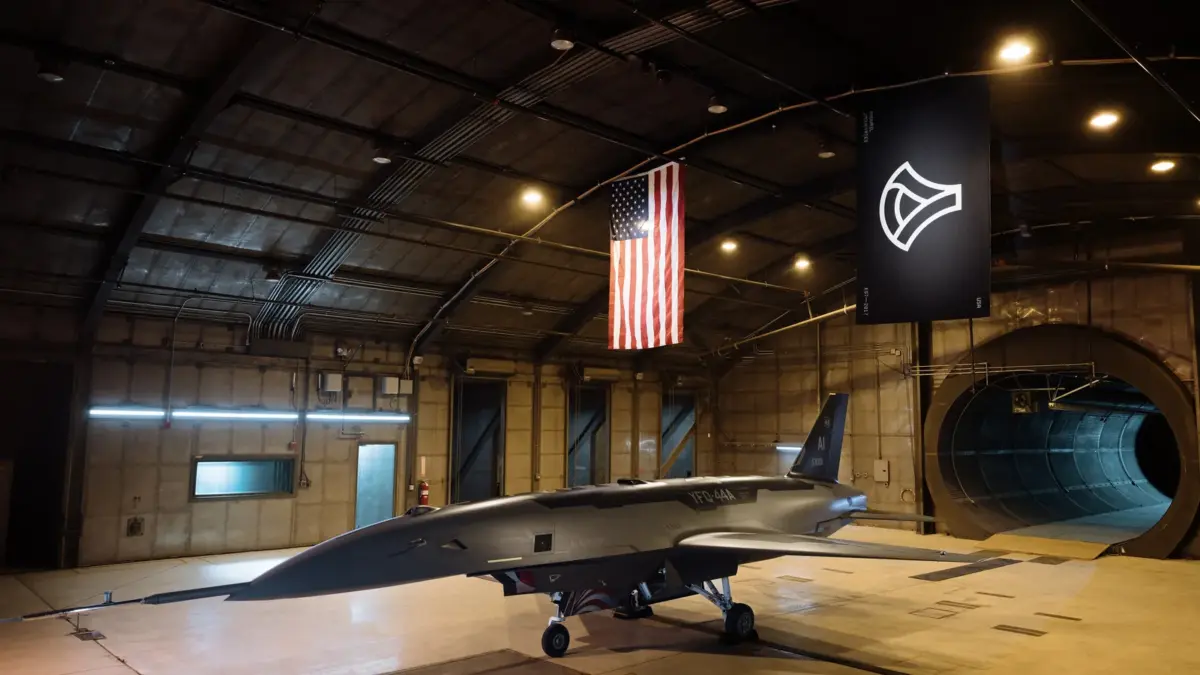
Testing is where hardware programmes lose time. A drone, a satellite or a jet engine produces large volumes of sensor data on every test run, and engineers spend weeks working out what happened and whether the next design change fixed it. Nominal’s product, an AI platform built for engineering and testing complex hardware, is aimed at that stage of the work.
The company is four years old and says it has 80 commercial and government customers. The best known is Anduril, the defence company that Stephens co-founded. In October the US Air Force selected Nominal for a $71.2m Strategic Funding Increase, a programme that requires matching money from outside the Air Force. The chief executive and co-founder, Cameron McCord, is a former US Navy submarine officer and an Anduril alumnus. TechCrunch did not report revenue figures.
Why the valuation moved so fast
Two things are being priced. The first is defence demand. Procurement budgets for autonomous systems are rising, and every new airframe or munition has to be tested before a contract can move to production. Software that shortens that cycle is sold to the prime contractors and the new entrants alike.
The second is position. Hardware test data has historically sat in in-house tools and spreadsheets. A company that becomes the standard system for it inside defence suppliers is hard to replace, because years of test history sit in its format. That is the bet investors appear to be making at three times the March price.
The risks are just as specific. A customer base weighted towards defence depends on government budgets and on a small number of large buyers, and a close commercial relationship with Anduril cuts both ways if Anduril’s own growth slows. A tripling in eight months also leaves little room for a down round if public markets for defence technology cool.
The read-across for founders
For UK and European hardware founders the lesson is in the shape of the business rather than the size of the round. Nominal sells to the engineers who build physical products, wins a government contract that requires private co-investment, and positions itself as infrastructure rather than as an AI feature. Investors are paying for that combination now, while defence demand is high, and pre-emptive term sheets are a sign of it.