Foundation – humanoid robot start-up has not paid staff since 30 October
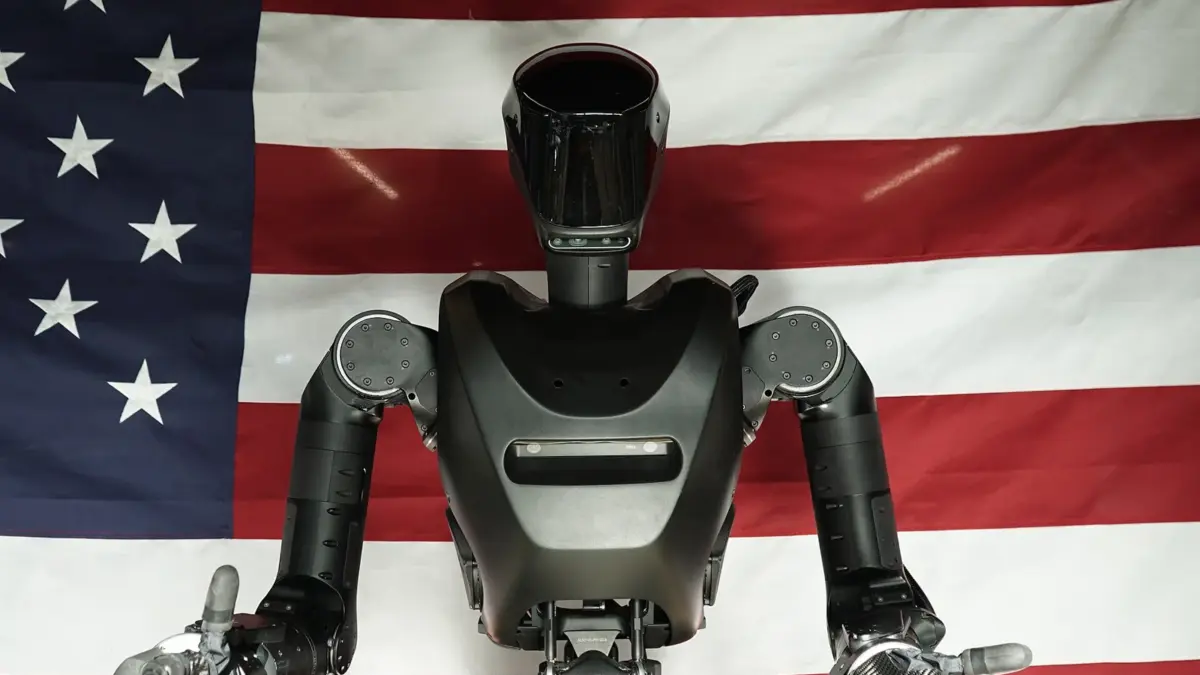
Foundation, the San Francisco maker of military humanoid robots that is trying to raise money at a $3bn valuation, missed its 30 October payroll, CNBC reports. Its chief executive is the only board member and borrowed $4.6m from the company last year.
By George Bregman · · 3 min read · US · Signal strength 4 of 5
Foundation missed its 30 October payroll and staff have not been paid since, CNBC reported on 14 November, citing people with direct knowledge of the matter.
Chief executive Sankaet Pathak is the sole board member, owns most of the shares and borrowed $4.6m from the company last year, the people said; it also ran short of payroll cash in August.
The widely reported $24m in Pentagon contracts belongs to Boardwalk Robotics, which Foundation bought in late 2024, according to CNBC's source. Pathak is seeking hundreds of millions at a $3bn valuation.
Foundation Future Industries, a San Francisco start-up that builds humanoid robots for military use, has not paid its employees since it missed payroll on 30 October, CNBC reported on Saturday 14 November. The report rests on people with direct knowledge of the matter who asked not to be named. They said chief executive Sankaet Pathak told staff in a memo this week that he was working on finding money to pay back wages. A spokesman for Pathak acknowledged receiving the main points of the story on Thursday but did not respond to requests for comment.
A one-person board and a $4.6m loan
Pathak co-founded Foundation in April 2024 and is its sole board member. He also owns most of its shares, the people said, a structure that has worried prospective investors. It allowed him to borrow $4.6m from the company last year, which he described at the time as a short-term loan. Existing investors know about the loan from the company’s financial disclosures. CNBC cites public records showing that an LLC naming Pathak as sole principal bought a $4.6m property in Sausalito, California, in October 2025.
It was the second shortfall since August, when Foundation also ran out of payroll cash, the people said, and staff waited about two days until a bridge loan from an existing investor arrived. Pathak has been trying since at least January to raise hundreds of millions of dollars at a $3bn valuation.
Where the contracts came from
Foundation has been widely reported as holding $24m in Pentagon contracts. According to a person with knowledge of the matter, that figure comes from government research contracts won by Boardwalk Robotics, a Florida company Foundation acquired in late 2024. Boardwalk’s robot Alex became the basis of Foundation’s first robot, the Phantom MK-1. A second person said the Boardwalk deal set performance milestones for the robot that have not been met.
Foundation’s backers include Eric Trump, introduced in April as an investor and chief strategy adviser. His spokesperson has said he has no involvement in the company’s management or its government contracts. Pathak’s previous company, the fintech intermediary Synapse, collapsed in 2024; CNBC reports that it left more than 100,000 Americans with $265m in deposits locked out of their accounts.
What it means for founders and investors
For investors, the main lesson is about governance. With one director, nobody inside the company was placed to question a loan to the chief executive or to raise the alarm when cash ran short twice in three months. Investors looking at a $3bn round should ask who sits on the board, whether insider loans need independent approval, and and which contracts came with a business it bought. Engineers weighing an offer from a well-publicised start-up can ask the same questions.
Venture Signal analysis is general information for founders, fund managers and operators. It is not investment, legal or tax advice. Figures labelled modelled, illustrative or desk estimate are worked examples, not company disclosures. Spotted an error? Corrections are published on the article.
Michael Saylor's Strategy lost 30% on the stock market last week. Bitcoin now trades about a fifth below the company's average purchase price, its shares are worth less than its coins, and MSCI will drop it from its indexes on 30 November.
SEC enforcement staff are examining potential accounting issues at Nvidia, Reuters reported, and the New York Times says the inquiry is at an early stage. Nobody has said which issues. Here is what is known, and the questions investors have already raised.
Bitcoin dropped to about $55,830 late on Friday, its lowest level since September 2024, as the selloff in AI stocks spread to crypto. Traders lost $2.4bn in liquidated futures bets in 24 hours.