The ADGM Courts granted a worldwide freezing injunction against the unknown perpetrators of the 29 October hack. Notices can be served on the blockchain, and a list of 26,000 wallets will be updated as funds move.
By George Bregman · · 3 min read · Middle East · Global · Signal strength 3 of 5
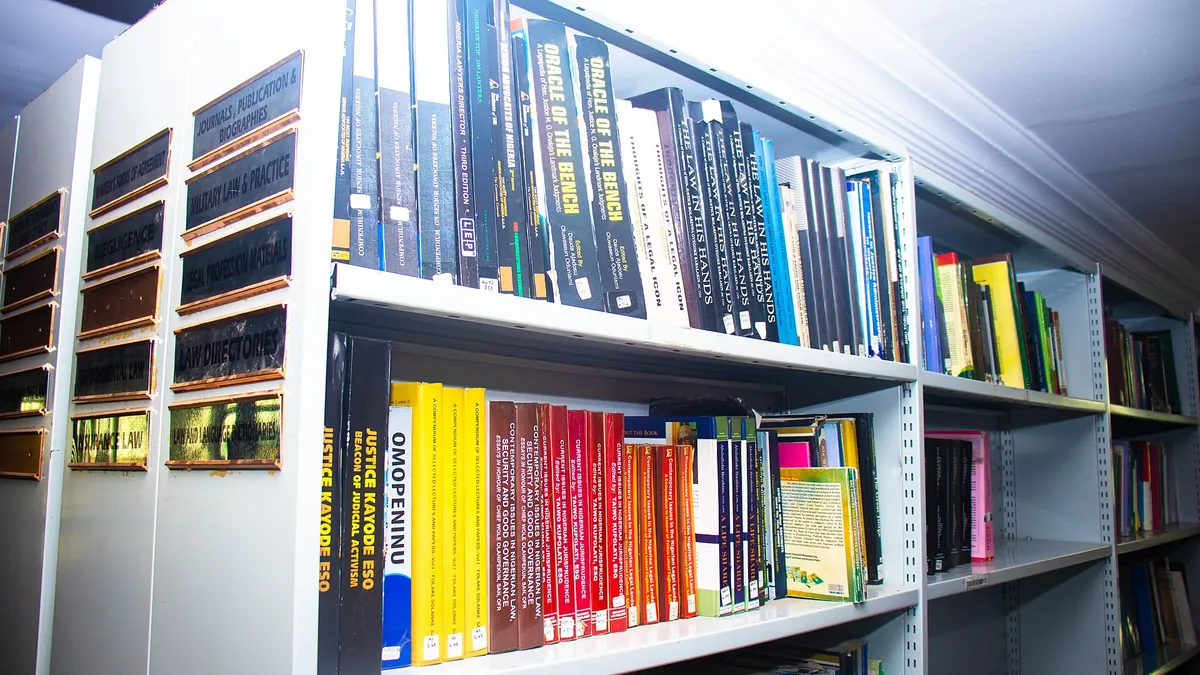
Law books in a chambers library. Photo: Ndawoje, CC BY-SA 4.0, via Wikimedia Commons
30s30-Second Executive Summary
The ADGM Courts in Abu Dhabi granted Binance a $6.5bn worldwide freezing injunction against the unidentified perpetrators of the 29 October hack, in which about $6.3bn was stolen.
The orders can be served via the blockchain, and the market will be told of a 'living list' of 26,000 wallet addresses holding stolen assets, said Binance's lawyer Kendall Day of Gibson Dunn.
The $6.5bn is the size of the injunction, not the amount recovered; Binance said on 31 October that about $2.85bn had been frozen or intercepted.
Binance has obtained a $6.5bn worldwide freezing injunction from the courts of Abu Dhabi Global Market (ADGM) as it tries to recover the assets stolen in the 29 October hack, The National reports. The order is against “certain persons unknown, being the perpetrators of the fraud”. The theft of about $6.3bn is the largest in crypto on record, and the FBI has attributed it to TraderTraitor, a North Korean state-backed hacking group.
The court also granted interim orders against named parties that have frozen stolen assets but are not accused of wrongdoing, and orders requiring stolen assets to be handed over, according to Cointelegraph.
Served on the blockchain
“This $6.5 billion mega-injunction is one of, if not the, largest publicly known freezing orders ever made,” said Kendall Day of the law firm Gibson Dunn, which represents Binance. The orders can be served via the blockchain, Day said, and the market will be notified of a constantly updated list of 26,000 wallet addresses identified as holding stolen assets, so that those assets can be frozen quickly even while they are being laundered.
The order matters most to the companies already holding frozen tokens. Some issuers, exchanges and other partners want a formal court order before they release, transfer or return frozen assets, and Binance said its order “assists in creating that pathway”.
What has been recovered
The $6.5bn is the size of the injunction, not a tally of recovered assets, and Binance did not say how much has been returned so far. On 31 October it said about $2.85bn had been frozen or intercepted. Cointelegraph reported on 13 November that the US Justice Department had said it obtained court authorisation to seize or restrain more than $1.2bn, part of more than $2.7bn frozen by government and private-sector efforts. Binance has covered customers’ losses from its own funds, committing more than $6.34bn from its treasury, its Secure Asset Fund for Users and insurance funds; we looked at who pays for the loss after the hack.
What it means for founders and investors
For exchanges, custodians and stablecoin issuers, the case gives a template: one court order that reaches wallets anywhere, served on-chain, with a list of addresses that changes as the money moves. Firms that hold frozen tokens should have a way to check addresses against published lists and respond within hours. Investors should note how the attack started. Binance said fake job interviews and a compromised internal AI tool gave the attackers control of engineers’ wallets, a weakness in people and tools rather than in code. Changpeng Zhao spoke about security weeks before the hack.
Venture Signal analysis is general information for founders, fund managers and operators. It is not investment, legal or tax advice. Figures labelled modelled, illustrative or desk estimate are worked examples, not company disclosures. Spotted an error? Corrections are published on the article.
Michael Saylor's Strategy lost 30% on the stock market last week. Bitcoin now trades about a fifth below the company's average purchase price, its shares are worth less than its coins, and MSCI will drop it from its indexes on 30 November.
SEC enforcement staff are examining potential accounting issues at Nvidia, Reuters reported, and the New York Times says the inquiry is at an early stage. Nobody has said which issues. Here is what is known, and the questions investors have already raised.
Bitcoin dropped to about $55,830 late on Friday, its lowest level since September 2024, as the selloff in AI stocks spread to crypto. Traders lost $2.4bn in liquidated futures bets in 24 hours.