“Nobody predicted the 2008 global financial crisis. And nobody – including me – predicted the 2020 pandemic.”
The admission came from Sir John Kay, one of Britain’s most respected economists, on the morning of 18 November at The Montcalm Mayfair. In the room were chairs, chief executives, regulators and officials from India, Britain and the Gulf, gathered for the 2026 London Global Convention on Corporate Governance and Sustainability, run by the Institute of Directors, India. The theme was “Boards at the Crossroads of Volatility and the AI Era”. Over two days, thirteen plenary sessions and the Golden Peacock Awards, the convention kept returning to one question: how should a board govern when it can no longer predict what comes next?
Kay’s answer set the tone. The failure, he argued, is the belief that you must predict the future to prepare for it. The job is to name risks that cannot be forecast and to make organisations “robust and resilient” to them: spare capacity, more than one source of supply, the ability to cut back quickly. For investors it is a useful test of any board presentation. Is this preparation, or a forecast in disguise?
Who was in the room
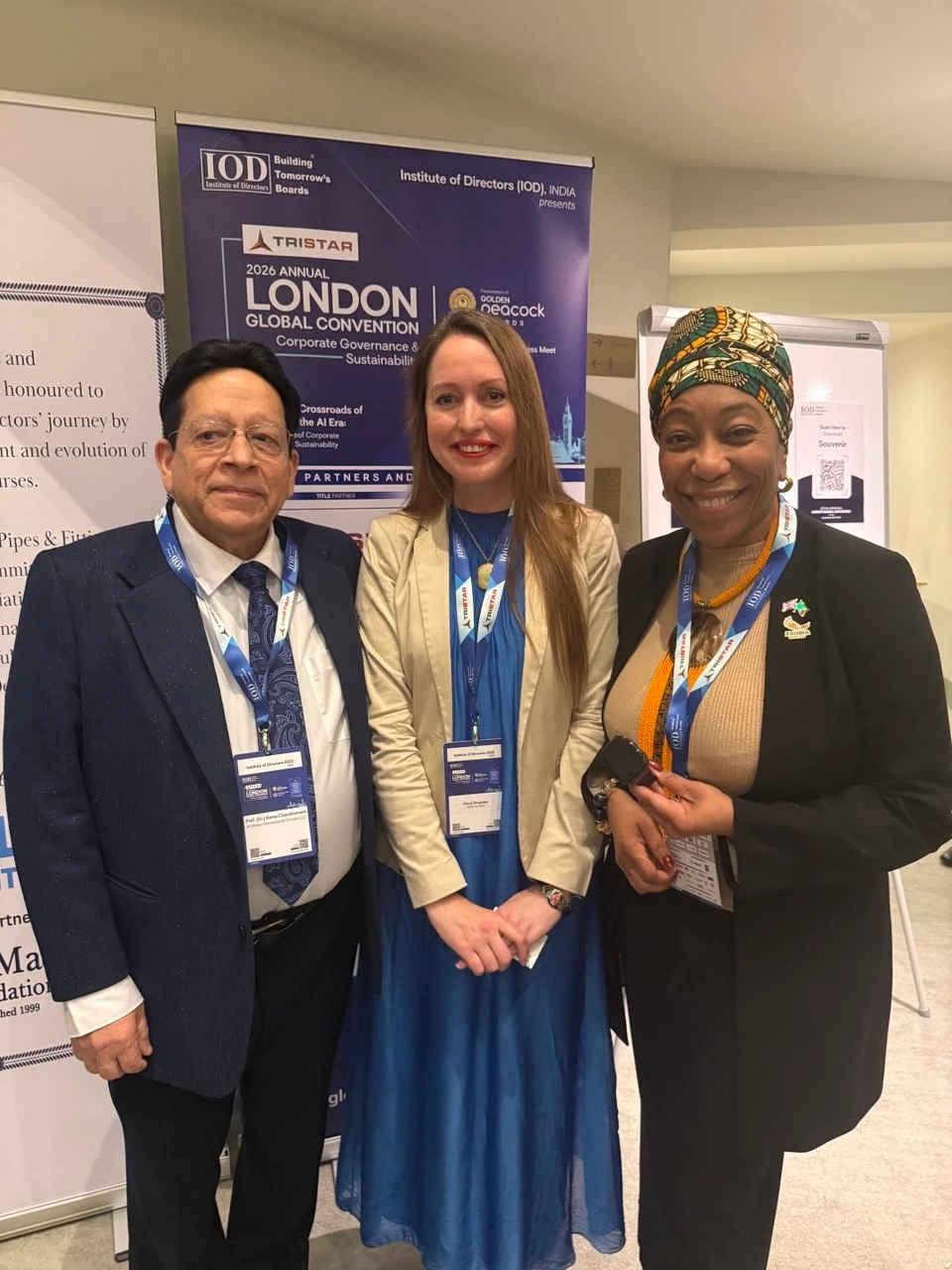
The Institute of Directors, India, has brought its convention to London for about twenty-five years and says it represents a network of more than 30,000 directors. Baroness Verma, member of the House of Lords and global chair of the institute’s advisory council, chaired the convention, and Manoj K. Raut, its CEO and secretary-general, hosted the awards. The keynote came from Eugene Mayne, founder and group CEO of Tristar Group, the title partner. Al Midas International Group of the UAE, represented by its founder, Dr Ron Chandiramani, was among the gold partners.
Most of the companies on stage were family-founded groups – Bajaj, Kirloskar, Godrej, Apeejay, Bird – alongside public-sector enterprises and Indian regulators. That makes the convention a fair read of how Indian capital thinks about governance.
Values as an asset
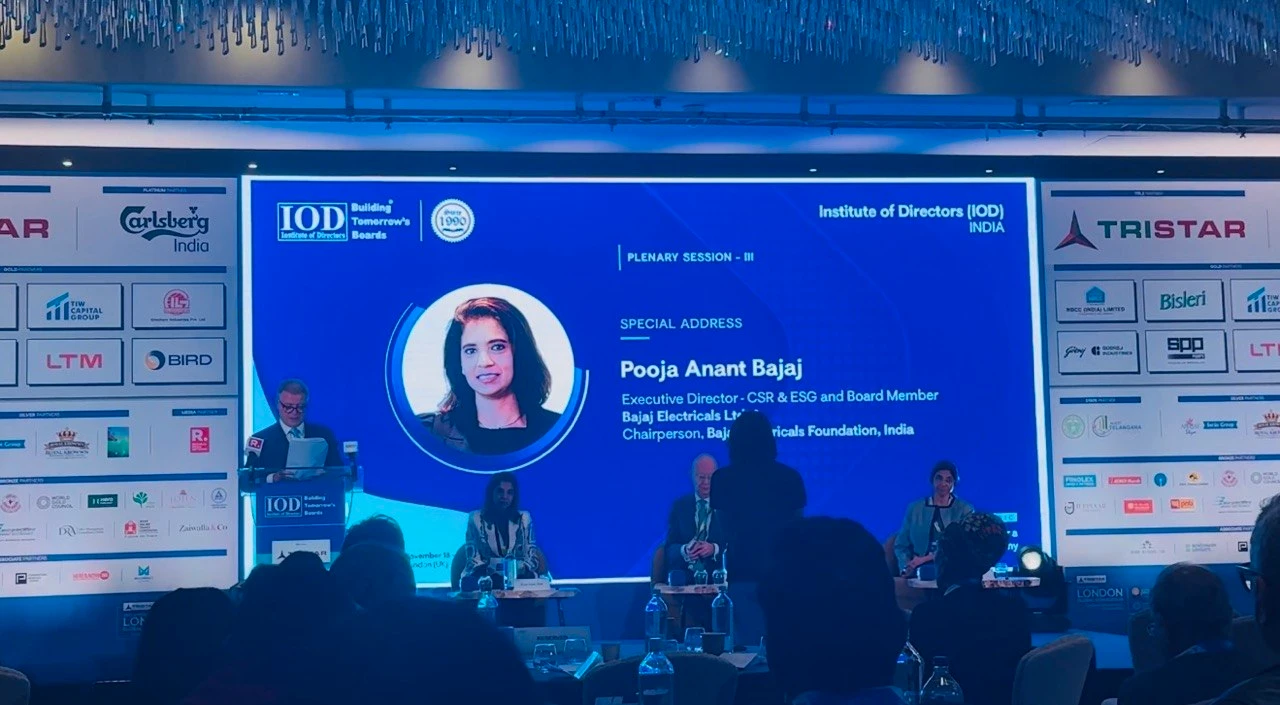
Pooja Anant Bajaj, executive director of Bajaj Electricals, whose family group marks its centenary this year, gave the line of the convention: “Many organisations inherit assets and very few inherit values.” Assets depreciate, she argued; values, lived honestly, appreciate. “Uncertainty does not reduce the responsibility of the board, it magnifies it.” Her lessons were practical: resilience before growth, succession planned while a company is strong, capital allocation as an expression of conviction. “Purpose and profit cannot occupy separate rooms.”
Sir Ian Blatchford, director of the Science Museum Group and a former investment banker, offered the best illustration of Kay’s point: the Bersey electric cab, hailed by Londoners in 1897. It ran about 30 miles on a charge and failed because it was too expensive and unreliable for its time.
AI agents nobody can see
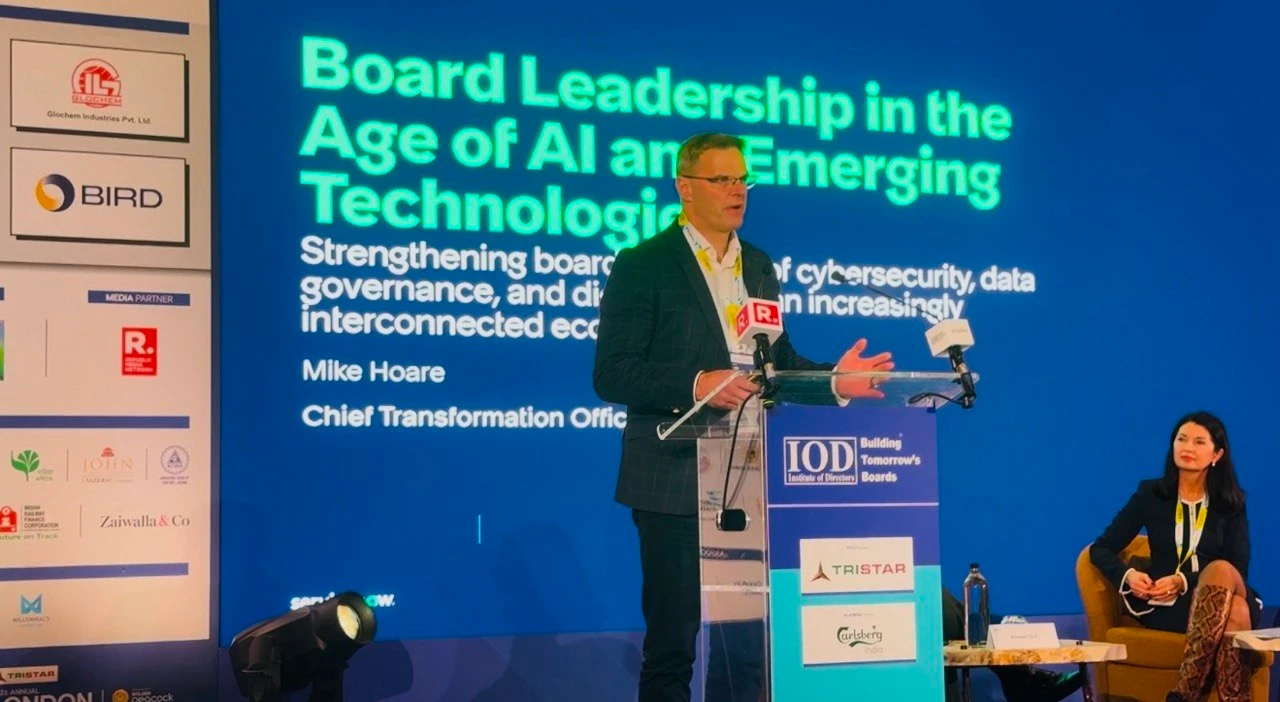
The AI session was the most useful for investors. Mike Hoare, chief transformation officer at ServiceNow, said that about 20 per cent of organisations were piloting AI in 2022 and that, by his count, 97 per cent now use it in some form. Many run AI agents they do not know about, and “the inability to see it means the inability to govern it”. He puts six basic questions to boards about where AI sits in their business; no organisation he had visited recently could answer all six. His advice was to treat an agent as a non-human employee, with guardrails, a job title and a manager who reviews its work.
Naveen G.V. of Benchmark Digital Partners made the case for connected systems. A night-shift operator photographed a small flange leak; the system linked it to an incident at a sister plant, then to the same pump at seventeen other facilities. AI in silos gives productivity, he said; connected AI gives you “the incident that never happened”. Lata Gullapalli of The Savoir Faire Company warned that AI brings “errors beyond humans’ imagination in scale and type”, and that people still have to judge whether the data makes sense.
Amit Naniwadekar, group CFO of SPP Pumps and Kirloskar Brothers International, gave the most honest account of AI at work. A model now runs his credit logic on customers before he signs, but he takes it “with a pinch of salt”, because it does perhaps 70 or 80 per cent of the work. Alok S. Kirloskar, named a distinguished fellow of the institute, put the governance principle plainly: machines may predict better and faster, but “accountability, ethics, judgement, and responsibility for the consequences of those decisions must remain with people”.
India’s place in ESG
It has been a difficult year for ESG: a political fight in the United States, large asset managers leaving climate alliances, the European Union narrowing its reporting rules. India is moving the other way. It was the first country to write corporate social responsibility into law, and since 2014 large companies have had to spend 2 per cent of their average net profit on CSR. The market regulator, SEBI, has made the Business Responsibility and Sustainability Report mandatory for the 1,000 largest listed companies. In June 2025 India reached half of its power capacity from non-fossil sources, five years ahead of its Paris target, and its net-zero horizon is 2070.
Bajaj said her foundation moved its environmental CSR spending from 40 to 100 per cent of its portfolio in three years, a board decision shaped by that law. Rajesh Pratap Singh Sisodia of NLC India summed up the energy side: power must be reliable, affordable and increasingly clean, and “a company that delivers only one or two of these will not serve the nation for long.”
Telangana, the convention’s state partner, came to make its pitch. S. Krishna Aditya, special secretary for industries and commerce, set out a target of a one-trillion-dollar state economy by 2034 and invited delegates to the state’s global summit in Hyderabad on 7 to 9 December.
The awards
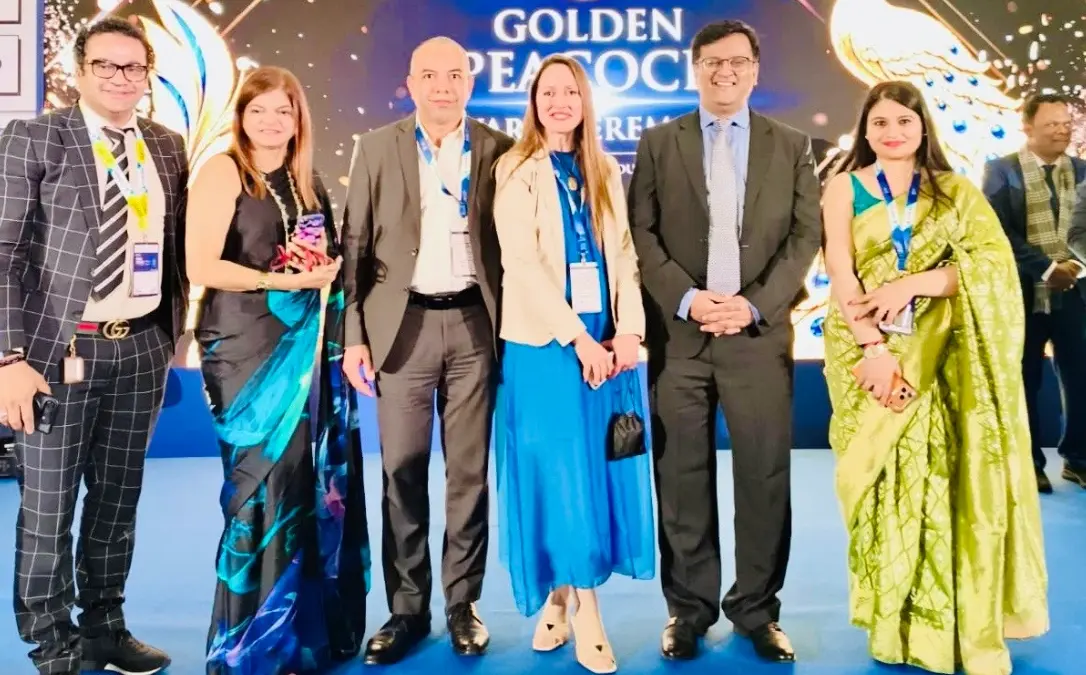
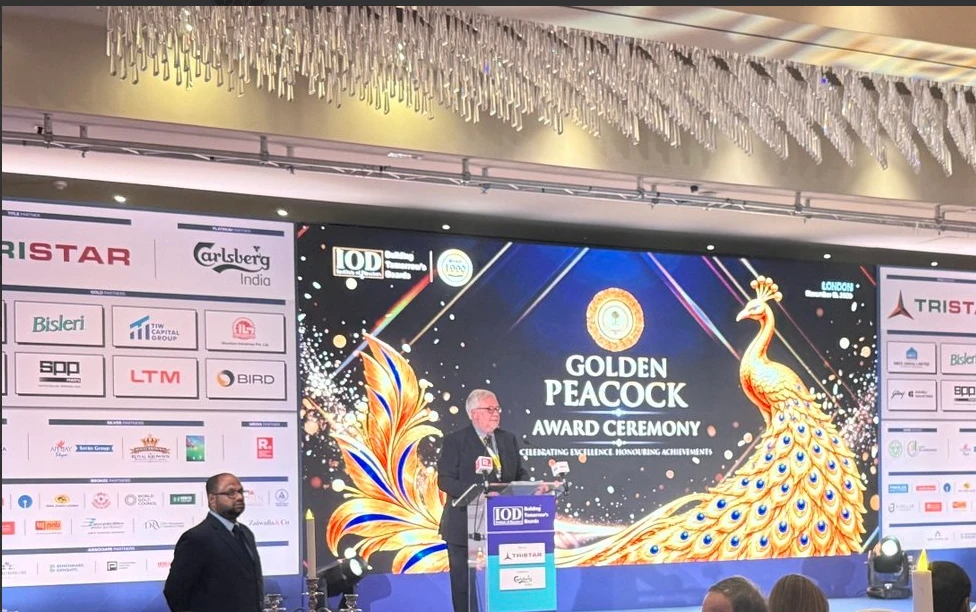
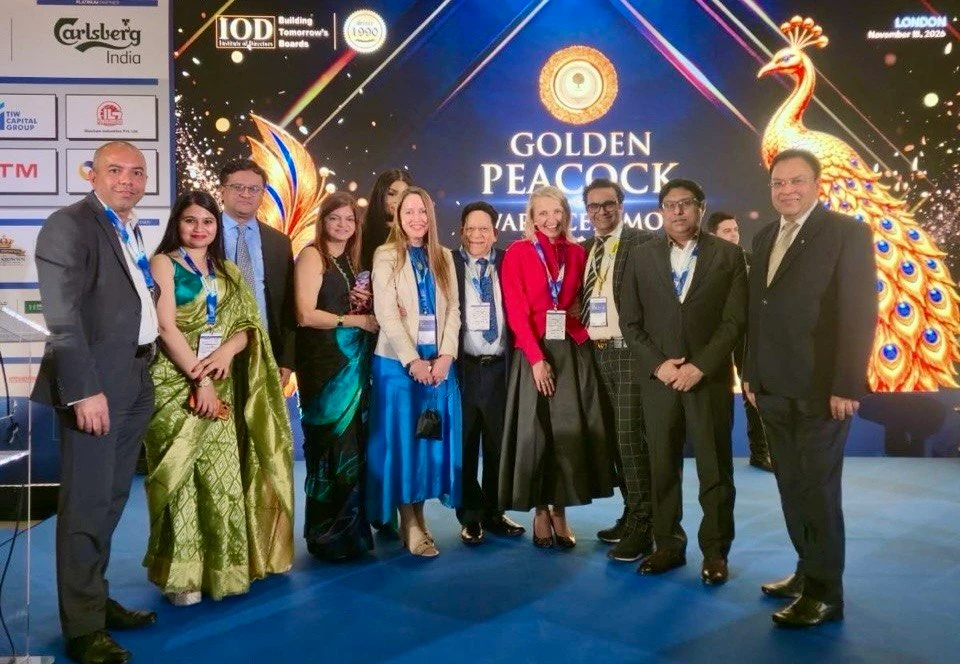
The Golden Peacock Awards, run since 1991, were judged by a jury chaired by Justice U.U. Lalit, a former chief justice of India. The global corporate governance awards went to Mahindra and Mahindra, Emirates NBD, Ferrovial and Dubai Electricity and Water Authority; the global sustainability awards to Hero MotoCorp, EXL Service, Pandora and E.ON; and the global ESG awards to TVS Motor, Integreon, Tristar Transport and Apollo Tyres (Hungary).
Opening the evening, Manoj Raut gave the convention its summary. “In this interconnected world, isolation is never the answer,” he said, and every board must ask: “Are we truly ready for tomorrow?” His warning applies to any portfolio company: “Yesterday’s success will give no entitlement for tomorrow’s opportunity.”
What to take away
On 20 November the institute moved to the House of Lords for a business meet, and the programme closes on 21 November with a session on trade and investment under the India–UK agreement signed in July 2025. The convention was strong on judgement and resilience and quieter on board power: in a room of family-founded groups, almost nobody asked what an independent director does when a founder-chair disagrees. Investors in Indian family companies should keep asking it. Baroness Verma’s challenge for next year pointed the same way: “we want to see young directors also being here in the room”.
The organisers deserve credit. Bringing ministers, peers, regulators and the heads of public corporations and family groups from three regions into one room for two days is a task few organisations would manage, and the institute has run its Golden Peacock Awards for thirty-five years.
The full review, with every session and more of the speakers, is published by Creativity’s UK: IOD London Global Convention 2026 Review.
Sources
- 2026 Annual London Global Convention on Corporate Governance and Sustainability, Institute of Directors, India: iodglobal.com
- Maria Bregman, “IOD London Global Convention 2026 Review”, Creativity’s UK: creativitys.uk
- Maria Bregman, “World AI Regulation Summit 2026 – review”, Venture Signal: venturesignal.org