Blackstone now expects Anthropic to receive a credit rating in the “double B” range after its stock market listing, according to the Financial Times. That is the top tier of speculative, or “junk”, grade. The firm is reportedly an anchor investor in a $63bn financing for Anthropic’s computing hardware, and had previously expected an investment-grade rating by 2027, TechCrunch says in summarising the report. Anthropic and Blackstone both declined to comment when TechCrunch contacted them.
What is, and is not, reported
The distinction matters. TechCrunch’s headline refers to credit agencies, but the underlying report is about what Blackstone expects. We have seen no published rating from Moody’s, S&P or Fitch, and Anthropic is not yet a listed company. A forecast from a lender, relayed by a newspaper, can change if the company’s finances or the structure of its debt change.
Anthropic filed for its IPO earlier this week, TechCrunch notes, after months of heavy spending on computing deals that has worried some investors. A high junk rating, the FT says, would make it harder and more expensive for the company to raise the money to keep funding that spending.
The financing behind it
The $63bn package was reported by Reuters, via Khaleej Times. Bank of America, Citigroup and Morgan Stanley are arranging the first-lien debt, which at about $43.5bn makes up 69% of the total, and Blackstone is providing the committed second-lien portion. Under the structure, a new special purpose vehicle buys Broadcom accelerators and networking equipment and leases them to Anthropic. Broadcom provides what Reuters calls “residual value support” to lenders, in effect a guarantee against falls in the value of the hardware. Deliveries are expected from 2027. Reuters links the deal to an earlier $35bn arrangement involving Apollo, Blackstone and Broadcom.
Seeking Alpha, citing the FT, reports that Anthropic holds more than $112bn in cash and equivalents and expects roughly $100bn from the IPO. We could not check that figure against a primary source, so treat it with caution.
Why European investors should care
A rating is a price signal, and it also decides who can buy the debt. Many insurers and pension schemes, including those in the UK and EU, run mandates that favour investment-grade paper. If a borrower of this size sits one step below that line, the pool of natural buyers shrinks and the coupon rises. That is general background, not something the FT report says about Anthropic.
For founders and funds in the AI supply chain, the wider point is how much of the build-out now runs on structured debt rather than equity. Chip leases, special purpose vehicles and vendor guarantees spread risk, but they also tie suppliers such as chip makers to their customers’ credit quality. Investors who hold stakes in suppliers or lenders should ask how exposed they are to a handful of borrowers.
What to watch
- Any response from Anthropic or the rating agencies once the IPO documents are public.
- The pricing and terms of the $63bn financing as lenders syndicate it.
- Whether other AI companies with heavy compute commitments are pushed towards similar structures.
- How the IPO prospectus describes the company’s debt and lease obligations.
Sources
- TechCrunch, “Anthropic expected to receive high junk rating from credit agencies following IPO, report says” (30 October 2026) – cites the Financial Times
- Financial Times, report of 30 October 2026 (paywalled; read through secondary coverage)
- Reuters, via Khaleej Times, on the $63bn financing for Anthropic’s Broadcom chips
- Seeking Alpha, via TradingView, summary of the FT report
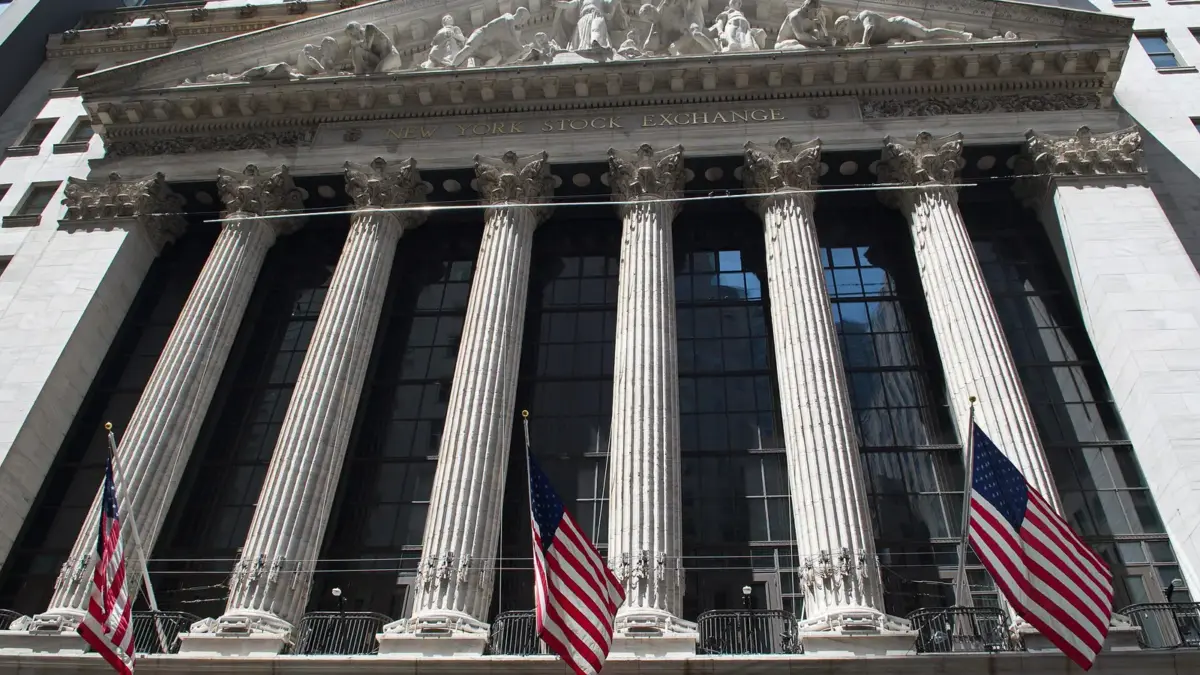
Photo: the New York Stock Exchange, by 颐园居, CC BY-SA 4.0, via Wikimedia Commons.